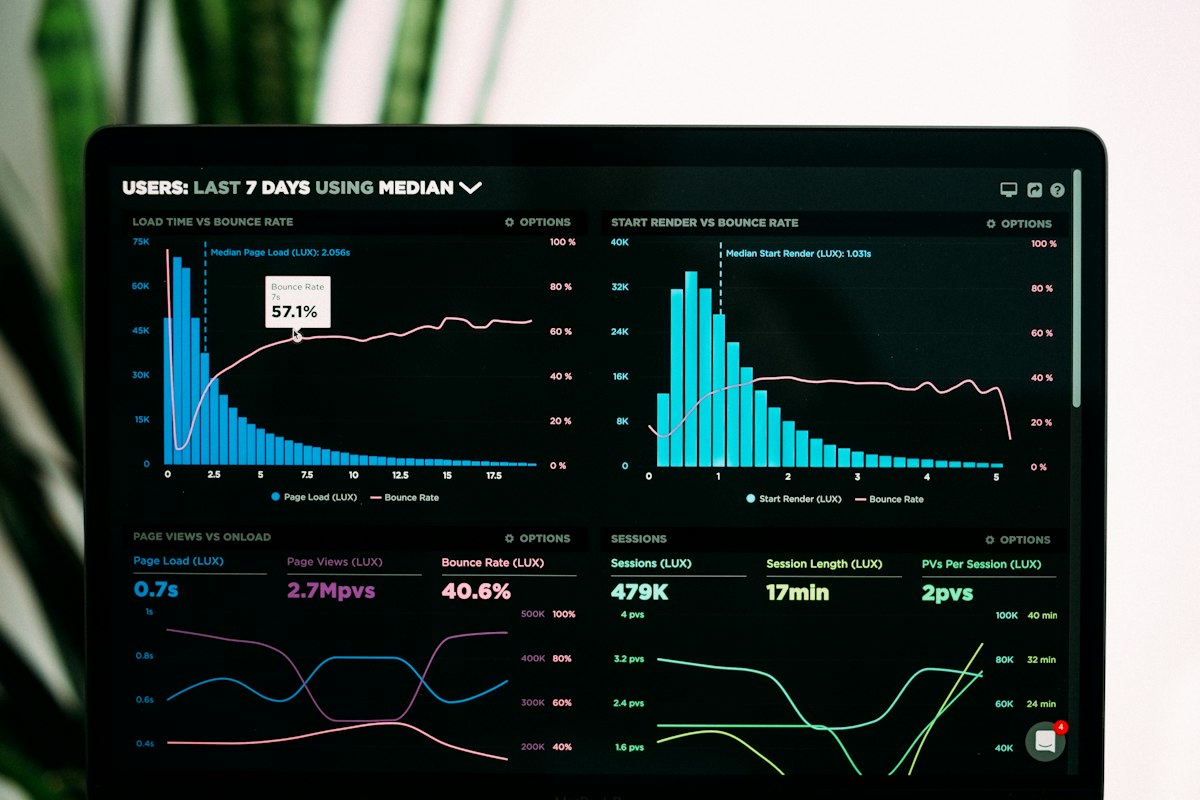
Core Web Vitals 2026: The March Update That Changed Everything for Construction Websites
The March 2026 Google update made Core Web Vitals more powerful than ever and introduced a site-wide rule that means slow pages now hurt your entire domain. Here is what construction companies need to do right now.
 Bilal
Updated
10 min read
Bilal
Updated
10 min read

If your construction company or small business website is slow in 2026, you are not just losing impatient visitors. You are losing Google rankings, and the March 2026 core update made that problem significantly worse overnight.
Core Web Vitals have technically been a Google ranking factor since 2021. For three years, most small business sites could get away with mediocre scores because strong content carried more weight than performance metrics. The March 2026 core update ended that arrangement. Google rolled all three Core Web Vitals metrics into a composite performance score that now sits alongside content quality in ranking calculations rather than behind it.
There is a second change most construction company owners do not know about yet. The March 2026 update introduced a site-wide aggregation rule. A bad performance score on a handful of pages now pulls down the ranking ability of every page on your entire domain. Not just the slow pages. Every page.
This article explains exactly what Core Web Vitals are, what changed in March 2026, and what construction companies and small businesses in the UK, US, and Canada need to do right now to protect and improve their search rankings.
What Are Core Web Vitals and Why Do They Matter in 2026
Core Web Vitals are three specific performance measurements Google uses to assess how a real visitor experiences your website. They measure loading speed, responsiveness, and visual stability. Together they form a picture of whether your website feels fast, smooth, and reliable to someone visiting it on a phone or laptop.
Largest Contentful Paint
LCP measures how long it takes for the largest visible element on your page to load. For most construction websites, this is the hero image at the top of the homepage, often a project photo. Google considers a good LCP to be under 2.5 seconds. Anything above 4 seconds is poor and actively hurts your ranking. Construction company websites are particularly vulnerable because they carry large unoptimised project photos uploaded directly from cameras. A high-resolution construction site photo without compression can cause an LCP of 6 to 10 seconds on mobile.
Interaction to Next Paint
INP measures how quickly your website responds when a visitor clicks a button or submits a form. A good score is under 200 milliseconds. According to Chrome UX Report data, approximately 28% of websites are still failing the INP metric alone. This means more than one in four of your competitors are handing you a ranking advantage if you fix your own INP first.
Cumulative Layout Shift
CLS measures visual stability. How much do page elements jump around as your page loads. A button that shifts position as an image loads above it is a CLS problem. Construction websites with multiple large images loading at different speeds often score poorly on CLS, creating an unstable, unprofessional experience that visitors abandon quickly.
What the March 2026 Core Update Actually Changed
Before March 2026, Core Web Vitals functioned as a tiebreaker. When two competing pages had similarly strong content, the faster one ranked higher. Strong content could still outrank a slow competitor even without great scores.
The March 2026 update changed the weighting structure. Analysis from Fog Digital Marketing and Valley Marketing Group found that pages ranking in position one now show meaningfully higher Core Web Vitals pass rates than pages sitting in position nine. The relationship between performance scores and ranking position became significantly more direct.
More importantly, the March 2026 update introduced the site-wide aggregation rule. Google now evaluates your domain overall performance health, not just individual pages. If 20% of your pages have poor scores, that aggregate poor performance affects how Google evaluates every other page on your domain, including your homepage and core service pages that would otherwise rank well on content merit alone. For construction companies with large project galleries or older blog archives never performance-optimised, this creates an invisible drag on every other page ranking potential.
The Real Business Cost of a Slow Construction Website
Research cited in IdeaFueled 2026 Core Web Vitals analysis found that a 0.1-second improvement in page load speed increases conversion rates by up to 8%. For a construction company website receiving 500 monthly visitors with a 3% current enquiry rate generating 15 enquiries per month, a 1-second speed improvement could push that to 4% or above, adding 5 or more enquiries per month.
At an average project value of 15,000 GBP for a residential construction business and a 25% close rate, those extra enquiries produce 1 to 2 additional projects per month. Over 12 months that is 15,000 to 30,000 GBP in additional revenue from a performance fix that costs significantly less to implement than the revenue it returns.
For businesses in the US and Canada where average project values run higher, a business operating with a 1-second slow load time is losing approximately 84,000 USD annually in conversion impact alone before the ranking impact is considered, according to IdeaFueled 2026 analysis.
Why Construction Websites Specifically Struggle With Core Web Vitals
Large Unoptimised Project Photos
A project gallery with 50 photos uploaded at original camera resolution adds megabytes of image data to every page load. Modern smartphone cameras produce images of 8 to 25 megabytes each. A gallery page loading 20 unoptimised images will produce LCP scores of 10 seconds or more on mobile. Every image on a construction website should be resized to a maximum of 1,200 pixels wide before upload, compressed using ShortPixel or Smush, converted to WebP format which reduces file size a further 25 to 30%, and lazy loaded so images below the fold do not load until the visitor scrolls to them.
Poorly Optimised WordPress Plugins
The average WordPress construction website runs 20 to 40 active plugins. Each adds scripts and database queries that increase page load time. Many plugins load their resources on every page regardless of whether that page uses the plugin. A contact form plugin loading its scripts on your homepage, where no form exists, adds unnecessary load time that contributes nothing. A plugin audit combined with a caching plugin like WP Rocket configured correctly typically produces a 40 to 60% reduction in page load time.
Shared Hosting Environments
Budget shared hosting, where your website shares server resources with hundreds of other websites, produces inconsistent response times that directly affect Core Web Vitals scores. Moving from shared hosting to managed WordPress hosting typically reduces server response time from 800 to 1,500 milliseconds to under 200 milliseconds. The cost difference is typically 10 to 30 GBP per month, a cost that returns significant value through improved rankings and conversion rates.
How to Check Your Core Web Vitals Score Right Now
Three free tools give you an accurate picture of where your construction website stands against Google 2026 standards.
Google PageSpeed Insights at pagespeed.web.dev returns a score out of 100 for both mobile and desktop with specific issues listed by their impact. Run it for your homepage, your services page, and your project gallery page. Your mobile score matters most for construction searches.
Google Search Console has a dedicated Core Web Vitals report under the Experience section. Unlike PageSpeed Insights which tests a single moment, Search Console shows real-world field data from actual visitors over the past 28 days and flags specific URLs with poor scores. This report shows the scope of your domain-wide performance problem.
GTmetrix at gtmetrix.com provides a detailed waterfall view showing exactly when each element loads and what is blocking what. It is particularly useful for diagnosing complex LCP issues where the slow element is not immediately obvious.
If your mobile score on PageSpeed Insights is below 50, your Core Web Vitals are actively suppressing your rankings. Between 50 and 89 needs improvement. At 90 or above, performance will not hold back your rankings.
The Priority Fix List for Construction Company Websites
Compress and resize every image on your site. This single fix produces the largest Core Web Vitals improvement on most construction websites. Install ShortPixel or Imagify to bulk-compress existing images and set a maximum upload size of 1,200 pixels width with WebP conversion enabled for new uploads.
Install and configure a caching plugin. WP Rocket is the most effective option for WordPress construction websites. Proper caching configuration reduces repeat page load time by 50 to 80% for returning visitors.
Move to managed WordPress hosting if you are currently on shared hosting under 5 GBP per month. Cloudways, Kinsta, and WP Engine all provide significantly better performance starting at 10 to 25 GBP per month.
Audit and remove unnecessary plugins. Deactivate and delete any plugin your site does not actively use. For remaining plugins, check whether they load scripts on pages where they serve no function.
Enable lazy loading for all images, particularly on your project gallery pages. WordPress enables this by default for media library images but some gallery plugins override this setting.
For more on how website speed affects lead generation, read our article on how to get more project enquiries from your construction website. For the connection between performance and Google rankings, see our guide on how to get your construction company on page one of Google.
How Core Web Vitals Connect to Your Wider SEO Strategy
Core Web Vitals do not operate independently from your broader SEO strategy. Poor Core Web Vitals cannot be rescued by excellent content alone, but excellent Core Web Vitals cannot rescue thin content either. The relationship is both-and rather than either-or. Construction companies with strong scores but thin content see diminishing returns. Companies with strong content but poor performance see that content suppressed below its ranking potential. Both need to be strong simultaneously.
This is why every SEO engagement at Bilal Web Studio includes a technical performance audit alongside keyword research and content planning. For the complete picture of construction company SEO in 2026, read our article on what local SEO is and how it works for construction companies and our timeline breakdown of how long SEO takes for a construction company website.
Frequently Asked Questions
What are the three Core Web Vitals metrics?
The three Core Web Vitals are Largest Contentful Paint which measures loading speed of the main page element and should be under 2.5 seconds, Interaction to Next Paint which measures responsiveness to visitor interaction and should be under 200 milliseconds, and Cumulative Layout Shift which measures visual stability and should be under 0.1.
Did the March 2026 Google update change Core Web Vitals scoring?
Yes. The March 2026 core update increased the weight of Core Web Vitals in ranking calculations and introduced a site-wide aggregation rule. Poor performance on individual pages now affects the ranking ability of an entire domain, making domain-wide performance optimisation more important than targeting individual pages in isolation.
Why do construction websites typically have poor Core Web Vitals scores?
Construction websites are vulnerable because they carry large unoptimised project photos, often run many plugins simultaneously, and are frequently on budget shared hosting. These three factors combine to produce page load times well above the thresholds Google considers acceptable in 2026.
How quickly do Core Web Vitals improvements affect Google rankings?
After fixes are implemented, Google typically recrawls and updates field data within 28 days. Sites moving from failing to passing Core Web Vitals typically see measurable ranking improvements within that 28-day window, with sites that already have strong content often seeing the most dramatic improvements.
Can Bilal Web Studio fix my construction website Core Web Vitals?
Yes. Bilal Web Studio provides website maintenance and IT support for construction companies including Core Web Vitals optimisation, image compression, caching configuration, hosting assessment, and plugin audits. Every SEO retainer client receives a performance audit as part of onboarding. Book a free consultation at bilalwebstudio.co.uk.
Ready to Fix Your Construction Website Speed?
The March 2026 update raised the performance bar for every construction company competing in search. The good news is that 28% of competing websites are still failing the INP metric alone. Fix your Core Web Vitals before your competitors do and gain a ranking advantage that compounds as your content strategy builds alongside it. Bilal Web Studio provides website maintenance, IT support, and SEO for construction companies across the UK, US, and Canada. Core Web Vitals optimisation is included in every engagement. Book your free website performance audit at bilalwebstudio.co.uk or email [email protected]. You will hear back within 1 hour.