
Residential construction clients search Google, look at your photos, and call if the work looks right. Commercial clients work differently. A property developer or facilities manager evaluating contractors for a six or seven-figure project runs a significantly more thorough pre-qualification process. Your website is a central part of it.
If your website looks like it was built years ago, loads slowly, or fails to communicate professional credibility quickly, commercial clients remove you from their list before making contact. They do not explain why. You never know the conversation happened.
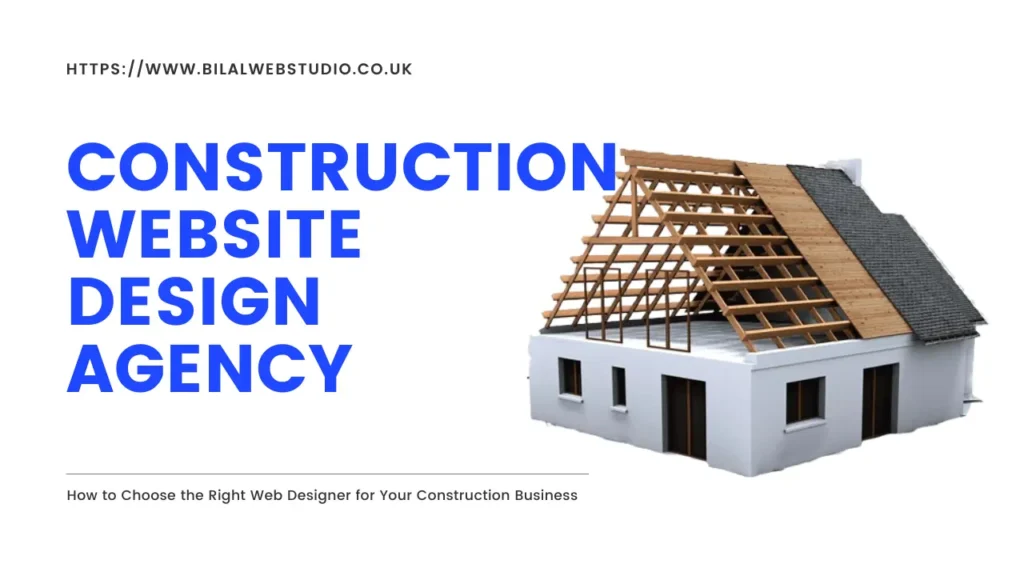
A modern construction website design changes this outcome. This article explains exactly how.
How Commercial Clients Use Your Website
A residential client searches for a builder and calls whoever looks best. A commercial client assesses you across multiple touchpoints before deciding whether to request a quote.
They visit your website to understand your company size and capability. Look at your project gallery to assess the scale and type of work you have delivered. Read your about page to understand your team and track record, and check your services page to confirm you have relevant experience. Last but not least they look for named client references or case studies from commercial projects.
If any of these elements are absent, outdated, or unconvincing, they move to the next option on their list. Commercial clients rarely follow up to ask for more information. They find a competitor whose website already answers their questions.
What a Modern Construction Website Design Communicates to Commercial Clients
A modern construction website design tells commercial clients several things within the first 30 seconds of their visit.
Your company is active and delivering work at a professional level. Projects are documented in detail with real images and clear scope descriptions. Your team is credible, and your processes are established. You have worked on projects comparable in scale or complexity to what they need. Most important, you are easy to contact and responsive.
None of this requires elaborate copy or expensive photography. It requires a clean, well-structured site presenting real work clearly and making next steps obvious.
The Specific Elements Commercial Clients Look For
Detailed Project Case Studies
A photo gallery alone is not enough for a commercial audience. Each significant project should have its own case study page or detailed entry covering the project brief, the scope of work, the timeline, any specific challenges addressed, and the outcome.
Commercial clients want to understand your process, not just your output. A detailed case study demonstrates project management capability alongside the quality of the finished work.
Defined Services With Commercial Relevance
Your services page should clearly indicate whether you work on commercial projects. List the types of commercial work you have delivered. New build commercial properties. Office fit-outs. Industrial units. Retail refurbishments. Healthcare facilities. Educational buildings. Be specific.
A services page listing only “extensions, renovations, and new builds” without any commercial framing excludes you from consideration by commercial clients who are not sure you have relevant experience.
Named Clients or Project References
Residential clients are rarely named on construction websites. Commercial projects often have publicly known locations or organisations attached to them. Where your clients permit it, name the project, the location, and the brief.
A commercial client seeing a named project similar to their own requirement gains confidence quickly. Anonymous “previous project” entries give them nothing to assess.
Clear Company Credentials
Registration numbers, accreditations, insurance details, and professional memberships belong on a modern construction website design targeting commercial clients. These details are often deal-breakers in the pre-qualification stage. Commercial clients need to confirm you meet compliance requirements before initiating any formal conversation.
A Professional Team Page
Commercial clients want to know who they are dealing with. A team page with real photos, names, roles, and brief backgrounds personalises your company and builds confidence. It also addresses the common concern about whether you are a one-person operation or an established business with sufficient capacity for a large project.
How Site Speed Affects Commercial Credibility
A slow website undermines your credibility with commercial clients before they read a single word. Commercial clients browsing construction companies across multiple sites on a laptop or phone form rapid judgements about each. A site loading slowly signals a business operating below professional standards.
Google PageSpeed data consistently shows construction websites averaging load times well above the 3-second threshold considered acceptable. A modern construction website design built with performance as a priority loads in under 2 seconds. This puts you ahead of the majority of competitors before content even plays a role.
Mobile Performance Matters for Commercial Clients Too
Commercial clients, including property developers and project managers, access websites on mobile regularly. They browse during site visits, between meetings, and while travelling. A construction website working poorly on mobile does not get a second visit from a commercial prospect who sees dozens of contractors on a weekly basis.
Every element of a modern construction website design should perform equally well on desktop and mobile. Forms, galleries, case study pages, and contact details all need to load and function correctly on a phone.
What Most Construction Company Websites Get Wrong for Commercial Audiences
- No project detail beyond a photo.
- Services described only for residential clients.
- No credentials, accreditations, or compliance information visible.
- An about page with no team information and no company history.
- Contact page with only a phone number and no form.
- No indication of project scale or typical contract value.
Each of these is a point at which a commercial client stops considering your business.
The Long-Term Value of Getting This Right
One commercial contract won through your website returns the cost of the website many times over. Because a commercial fit-out, new build project, or long-term facilities contract generates significantly more revenue than a single residential job.
A modern construction website design built to attract and convert commercial clients does not just affect one project. Each commercial relationship tends toward repeat work and referrals within the same industry sector.
We build modern construction website designs for companies targeting residential and commercial clients globally. Full copywriting, project case study structure, credentials pages, and SEO built in from day one.
Book your free strategy call at bilalwebstudio.co.uk or email [email protected]